Finding Reliable G61 Roofers for Your Home Repairs
If you live in Bearsden or the surrounding areas, you probably know the postcode G61 well. It covers a mix of older stone-built villas and more modern family homes. And anyone who has owned a house in this part of central Scotland knows that the weather tests your roof year-round. Rain, wind, frost, the occasional snow - they all take their toll on slates, tiles, and guttering. That is why finding skilled G61 roofers is something every homeowner here faces sooner or later.
I have been involved in building and property maintenance around Bearsden for the best part of two decades. Over that time I have seen good work, bad work, and everything in between. The difference between a roof that lasts twenty years and one that starts leaking after eighteen months often comes down to the quality of the installation and the materials used. It is not just about hammering on a few new slates. It is about understanding how water behaves, how different materials expand and contract, and how the local climate affects every joint and fixing.
So if you are looking for G61 roofers, what should you look for? The first thing is a solid understanding of traditional building methods. Many of the older houses in Bearsden have stone lintels above windows and doors, and the original roofs were built with natural slate tiles. Those slates were nailed onto tiling batten with copper nails, and the whole thing was designed to breathe. If you seal up a traditional roof with modern materials that trap moisture, you invite rot in the sarking boards, and that is a costly fix. A good roofer knows when to use breathable roof insulation and when to stick with something more conventional.
Common Roof Repairs in the G61 Area
In my experience, the most frequent call-outs in Bearsden are for slipped or broken slates, blocked guttering, and lead flashing that has lifted or split. Lead flashing is a craft in itself. It needs to be dressed properly around chimneys and valleys, and it must have enough expansion joints so it does not buckle in summer heat. I have seen lead flashing that was nailed too tight, and within two years it had torn. A roofer who knows lead will use the correct clips and leave the right gaps.
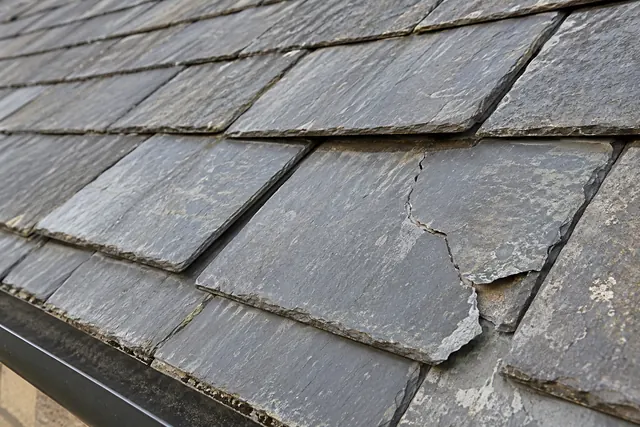
Another common issue is with the dry verge system on newer roofs. These plastic or metal edge profiles are meant to hold the last row of tiles securely, but if they are not fitted correctly they can rattle in the wind or let water run behind the facias. The same goes for soffits and downpipes. Soffits that are not ventilated properly can trap condensation in the roof space, leading to mould on the sarking. And downpipes that are undersized or blocked will overflow, dumping water onto the wall below and eventually into the foundation.
Materials Matter
A good roofer does not cut corners on materials. When I have worked with reliable G61 roofers, they always specify the right grade of OSB board for sarking, the correct tiling batten thickness for the slate gauge, and stainless steel or copper roofing nails rather than standard mild steel ones that rust. They also use bitumen torch-on felt for flat roof areas, not the cheap self-adhesive stuff that blisters after one summer. For repairs on pitched roofs, they carry a roll of tarpaulin and a roof ladder so they can do a temporary patch if the weather turns while they are working.
I remember one job in a street off Drymen Road where the owner had been quoted for a full strip and re-slate. The first contractor wanted to put standard concrete tiles on, which would have looked completely wrong on a Victorian villa. The second roofer - a local firm that had been working in Bearsden for years - recommended matching natural slates and kept the original stone lintel detail. They also replaced the zinc valleys with new lead flashing, and fitted a copper funnel for the boiler flue that matched the original. That job cost more upfront, but it preserved the character of the house and will last decades longer than the cheaper alternative.
Guttering and Ventilation
Guttering might not be glamorous, but it is the most neglected part of the roof. If your gutters are blocked with leaves and moss, or if they have sagged because the brackets have corroded, water will spill over the edge and soak the facias. Rotting facias lead to damaged soffits, and then you are into a full fascia and soffit replacement job. A proper roofer will check the fall on your gutters and make sure the downpipes are clear. They will also recommend fixing a dry verge system if your roof has exposed mortar beds at the gable ends, because those mortar joints crack and let water in over time.
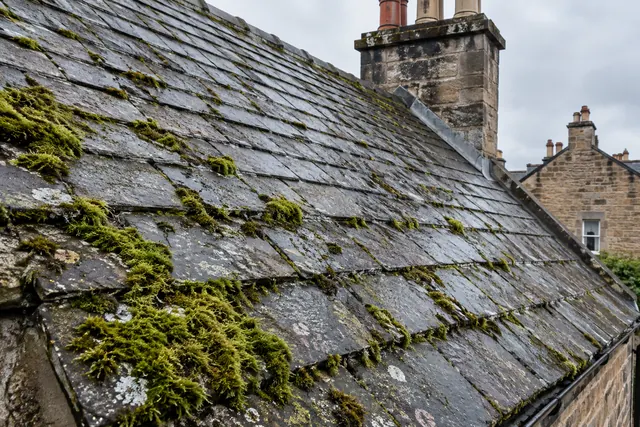
Roof ventilation is another area where I see mistakes. A loft space needs to breathe. If you block up the vents at the eaves or the ridge, warm moist air from the house will condense on the underside of the felt and cause the tiling batten to rot. Good roofers install proper roof ventilation - either through the soffits or with tile vents near the ridge. They also check that the roof insulation in the loft is not blocking the airflow. I have been in lofts where the insulation was packed tight against the eaves, and the sarking boards were black with mould.
What to Ask Before You Hire
When you are getting quotes, ask the roofer how they plan to handle the junctions around Velux windows. Velux windows are common in Bearsden extensions and loft conversions, and they are a common source of leaks if not flashed properly. The flashing kit needs to be integrated with the surrounding slates or tiles, and the lead apron at the bottom must extend over the tiles below. A roofer who has done many Velux installations will have a clear method for this.
Also ask about the dry verge system if your roof has one. Some roofers just screw the verge clips into the facia board, but that can pull loose over time. The better method is to fix them through the tiling batten into the rafter. And ask whether they use a bitumen torch for the felt on flat roofs or a cold-applied membrane. Torch-on is more durable if done correctly, but it needs a skilled hand to avoid burning the felt or leaving gaps at the seams.
Planning and Safety
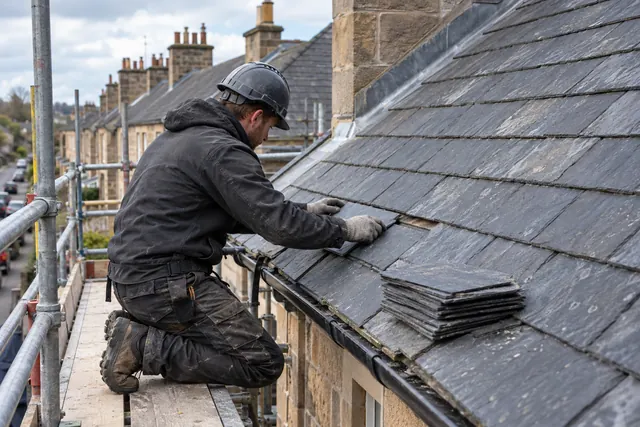
Safety is another factor. A professional roofer will turn up with a proper roof ladder, scaffolding if needed, and a harness system. They will also have a tarpaulin ready in case they need to leave a roof open overnight. I have seen cowboys working off a ladder wedged against a gutter, which is dangerous and often damages the guttering. A good roofer treats your property with care, and that includes not walking on fragile slates or leaning a ladder against lead valleys.
One last piece of advice. Do not pay the full amount upfront. A small deposit to secure the booking is normal, but the bulk of the payment should be on completion. And get the scope of work in writing, including the materials - specify slate tiles, not just "slates", and lead flashing, not just "flashing". That way there is no confusion later.
Finding reliable G61 roofers is not hard if you know what to ask and what to look for. The right roofer will save you money in the long run by doing the job properly the first time. They will use the right materials, respect the age and style of your house, and leave your roof watertight for years to come.